01. Sit back and wait for the rabbit type management
This approach accounts for a large proportion of enterprises. Many incoming inspectors open their eyes and close their eyes, follow the form, change them if there is a problem, or punish the supplier if there is a problem. Anyway, I do random inspections, and it is normal to have problems.
Of course, this kind of incoming inspector has a very humble position in the company. While being complained by downstream production, he was reprimanded by superior leaders; this kind of position either does not last long and has a high death rate. If you don't believe it, check the staff turnover rate in this department But; either the inspector has a soft temper and has no temper, otherwise he really can't do it. ——The result is that the first-line production department often jumps up and down!
There are also some incoming inspectors in the company who are very serious, strictly guard against the type, and continue to approve them. Due to the strict assessment of the company, all failure costs must be traced upwards, and a few pieces of materials can shut down the factory. This failure cost cannot be borne by 1 or 2 inspectors. Therefore, we strictly guard against the standards, and we will retreat when we find abnormalities, and we will never overstep the thunder pond; even over-correcting, as the saying goes, too much salt is not a bad dish! The production department is suffering, and the production line is suspended. If you want to use it, you must get the approval of the big leader and screen some of it for special permission, because the inspectors strictly control it. ——The result is that the suppliers often jump around because of the batch retreat! This post-mortem (supplier leaving factory is a defective product) post-mortem (in-factory inspection) is the lowest level of management in material quality control.
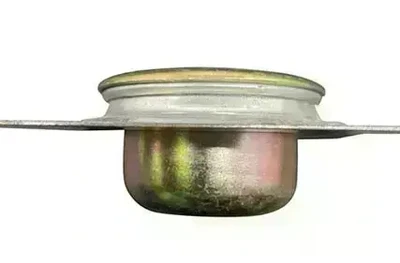
 Flange in Blocked TankJune 19, 2023Today we will mainly introduce the flange in the drum closure, which is made of cold-rolled steel and is divided into 2-inch and 4/3-inch sizes for standard 55-gallon stainless steel drums. The surfac...view
 The paint cap: The Perfect Solution for Paint ContainersMay 19, 2023If you're in the paint manufacturing or distribution industry, you know the importance of having reliable and secure containers to store and transport your products. The paint cap is a revolutiona...viewLeakage Problems Of Steel DrumJuly 1, 20221. Leakage of barrel body weldIn the original manufacturing of medium-sized steel drums, raw material steel plates with a thickness of 1.0mm may be commonly used, but after the thickness is changed to...view
 Secrets About Steel DrumsJune 30, 2022Who invented the steel barrel?The story goes back to 1903 more than 100 years ago. At that time, Ms. Nari Bligh's husband ran a company. Before she married her husband, she entered Europe as a rep...view
 Shandong Iron And Steel Co., Ltd. Strives To Seek Market Breakthroughs In The Steel Barrel IndustryJuly 1, 2022Shandong Iron and Steel Group Rizhao Co., Ltd. (hereinafter referred to as "Shandong Rizhao Company") was formed by the reorganization of several steel mills such as Jigang and Laiwu Steel u...viewThe introduction of drum plugJune 16, 2023The content of product introduction today is the drum plug, which is usually divided into two types: galvanized and coated, with two sizes of 2 inches and 3/4 inches, round in shape, and screwed into ...view
 EN
EN
 ko
ko  fr
fr  de
de  es
es  it
it  ru
ru  pt
pt  ar
ar  vi
vi  th
th