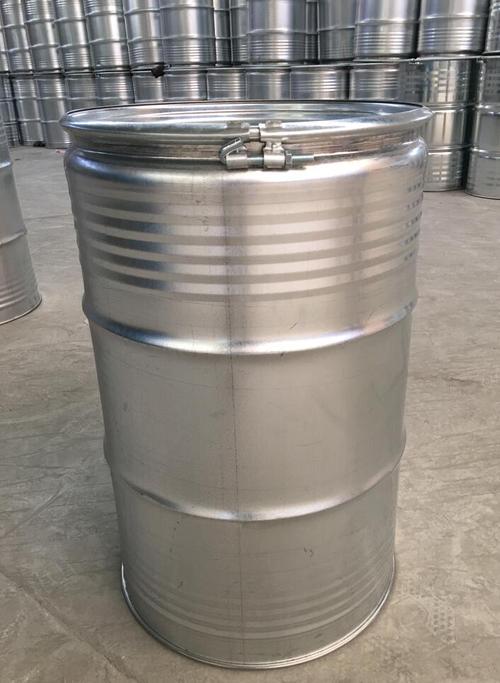
A steel drum is a container made of iron sheets, manufactured through processes like stamping, welding, and hammering. Its manufacturing process is relatively simple, with lower costs, but it has poor corrosion resistance and pressure resistance, making it prone to rust and deformation. Steel drums are used for storing common items like water and powders, as shown in the figure:
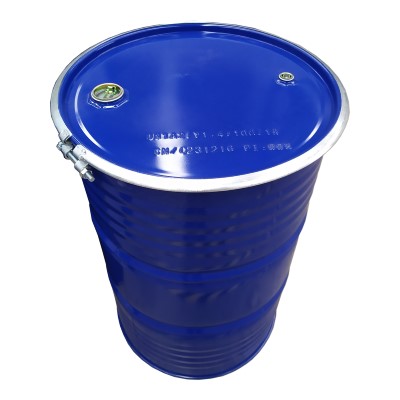
Cold-rolled steel drums are containers made from cold-rolled steel sheets, involving various processes, including cold rolling, shearing, welding, heat treatment, etc. Compared to regular steel drums, cold-rolled steel drums exhibit better corrosion resistance, superior pressure resistance, a smooth surface, and a longer lifespan. They are used for storing flammable and explosive materials such as chemicals and petroleum because of their excellent sealing properties, which effectively prevent leaks and fire hazards. As depicted in the figure:
Both cold-rolled steel and iron have their merits.
Iron: It possesses special physical and chemical properties, including heat resistance, wear resistance, corrosion resistance, non-magnetic characteristics, and low-temperature resistance.
Cold-Rolled Steel: It offers greater thickness precision, a smooth and attractive surface, and various excellent mechanical properties.
Different Designations
Iron: Also known as alloy cast iron, it refers to cast iron with added alloy elements, endowing it with special properties.
Cold-Rolled Steel: It is steel produced through the cold-rolling process.
Different Characteristics
Iron: Alloy elements can alter the structure of the cast iron matrix, providing it with special physical and chemical properties like heat resistance, wear resistance, corrosion resistance, non-magnetism, and low-temperature resistance.
Cold-Rolled Steel: It offers more precise thickness, a smooth and attractive surface, and various superior mechanical properties, especially in terms of processing. Cold-rolled coils are relatively brittle and not suitable for processing, so cold-rolled steel sheets typically undergo annealing, pickling, and surface leveling before being delivered to customers.
Different Uses
Iron: Widely used in sectors such as machinery manufacturing, metallurgy, mining, chemical industry, instrumentation, and refrigeration technology.
Cold-Rolled Steel: Widely employed in various fields, including construction, machinery, household appliances, and the coating and plating industry. Its numerous advantages have led to its continued extensive application across various industries.
 Complete Solution Of Packaging Technology Standards In North AmericaJuly 1, 2022The packaging technical standards involved in this chapter are shown in the table below.Internationally recognized standard definitions refer to definitions and related discussions that are generally ...view
 The Price Trend Of Construction SteelJuly 1, 2022Construction steel: On April 8, the average price of 20mm three-level seismic rebar steel in 31 major cities in China was RMB5123 / ton, down by RMB5 / ton compared with the previous trading day. This...viewUse of Steel Drum EnclosureJanuary 3, 2024After filling the steel drum, a closure device must be installed on the top of the drum to isolate the contents from the external environment, preventing leakage or reactions with the surroundings.For...view
 UN rating drumsApril 20, 2023Since 1 January 1991, all dangerous goods in international marine and international or domestic air transport were required to be in packaging displaying the "UN" marking. The mark indicates...view
 The Main Contents Of The Four Sessions Of The Standing Council Of China Packaging FederationJuly 1, 20221. Examine and approve the workReport of Han Xueshan, Vice President and Executive Secretary General of China Packaging FederationHan Xueshan's work report summarizes the work done in the first ha...view
 Irepas: There May Be A Correction in The Fourth Quarter, But Supply Remains TightJuly 1, 2022Global long product prices may correct in the fourth quarter as steel production grows markedly, but there is no clear end in sight to supply shortages, says the International Rebar Exporters and Prod...view
 EN
EN
 ko
ko  fr
fr  de
de  es
es  it
it  ru
ru  pt
pt  ar
ar  vi
vi  th
th